Agora Circle
All Resources

Video Series

Trading Psychology & Mindset

8 videos

Intraday, Swing, Ya Positional? | 3-Chart Framework Jo Har Trader Ko Chahiye

Intraday, Swing, Ya Positional? | 3-Chart Framework Jo Har Trader Ko Chahiye

The same stock can hand three traders three completely different outcomes on the same day, and the only variable that changed was the timeframe each was trading. This video makes the case that a large share of losses are not strategy failures at all, but timeframe failures: quietly turning an intraday trade into an unplanned swing, or a swing into a 'long-term investment', simply to avoid booking a loss. It introduces a three-chart framework for deciding, before entry, whether an idea is an intraday, swing, or positional trade, and why aligning with a higher timeframe tends to produce steadier results. The discussion covers how traders accidentally pick the wrong timeframe, how multi-timeframe analysis improves decisions, and why committing to one timeframe per trade protects both capital and psychology. For anyone whose account is bleeding despite good entries, the video reframes the problem: the setup may be fine; the mismatch between the trade you planned and the timeframe you actually held is what drains the account.

Read summary
₹27 Lakh to ₹12 Crore Stories Are Quietly Destroying You

₹27 Lakh to ₹12 Crore Stories Are Quietly Destroying You

Social media glorifies dramatic 'small money to crores' trading stories, and this video argues they are quietly harming the retail traders who consume them. Most people fail not because of strategy but because they are in a hurry to get rich, and copying a high-stakes trader's aggression without copying the structure underneath it is a fast route to losses. Drawing on Tom Hougaard's framework, where a professional may risk far more per point than an average retail trader, it highlights the part nobody imitates: situational analysis, psychological neutrality, and earning the right to be aggressive only after consistency is proven. With SEBI confirming heavy F&O losses and rising transaction costs, the message is that the visible profit in a highlight reel hides years of unseen discipline. Aspiring to the outcome while ignoring the process is exactly what makes the stories so dangerous.

Read summary
Stock Picking Isn't Dangerous, Ignorance Is | Jhunjhunwala, Damani & The Real Story

Stock Picking Isn't Dangerous, Ignorance Is | Jhunjhunwala, Damani & The Real Story

A popular narrative tells Indian retail investors that direct stock investing is dangerous and that they should simply do SIPs and trust the experts. This video points out an awkward contradiction: the fund managers, PMS desks, and family offices preaching that message largely built their own fortunes through direct, concentrated stock ownership. It echoes Warren Buffett's quip that there is more money in managing other people's money than your own, and notes that legendary Indian wealth creators built fortunes through ownership, not SIP calculators. The argument is not that everyone should pick stocks recklessly, but that the SIP-only story is intellectually lazy and conveniently serves those selling it. The real answer it points toward is the disciplined middle ground between gambling and blind outsourcing: learning enough to own businesses thoughtfully rather than surrendering all agency out of manufactured fear.

Read summary
You Know What To Do But Still Fail | The Real Reason Traders StruggleResource

You Know What To Do But Still Fail | The Real Reason Traders Struggle

Most traders believe they lose because of the wrong strategy or the wrong mentor. This video offers a more uncomfortable explanation drawn from Mark Douglas's 'Trading in the Zone': the human mind is simply not built for trading. Trading rewards discipline, probability, and emotional neutrality, while the brain craves certainty, comfort, and being right. With SEBI confirming that the large majority of individual F&O traders lost money in FY25, it argues the gap between the small group who survive and the majority who do not is psychological, not technical. The episode lays out the mental framework that separates them, why fear distorts decisions, and how to think in probabilities rather than certainties. A free download bundles the seven principles of a consistent winner, a fears self-assessment, and a trader-development tracker so the ideas become a practical checklist rather than abstract theory.

Read summary
Limits Are Psychological, Not Real | What Traders MissResource

Limits Are Psychological, Not Real | What Traders Miss

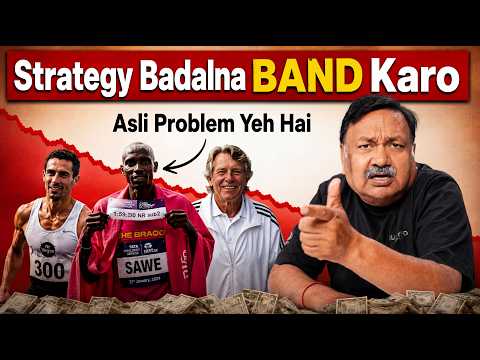
Using famous athletic barriers that everyone 'knew' were impossible until someone broke them, the four-minute mile, the Fosbury flop, and the first sub-two-hour marathon, this video argues that the same kind of mental barrier costs most Indian traders their capital. The lesson is that many limits traders accept as physical truths are actually beliefs, and beliefs can be rewritten. It connects these breakthroughs to trading psychology: the conviction that you cannot beat the market, that consistency is impossible, or that discipline is beyond you, is usually a story rather than a fact. SEBI's loss statistics are presented as the cost of that self-imposed ceiling. The encouragement is not blind optimism but a reframing, that once a barrier is shown to be psychological, crossing it becomes a matter of training and belief. A free workbook accompanies the episode.

Read summary
The Document Every Losing Trader Is Missing | Build Your Trading Business PlanResource

The Document Every Losing Trader Is Missing | Build Your Trading Business Plan

Random trading is a habit; written trading is a business decision. This video builds a complete one-page trading business plan, section by section. It starts with vision and objectives, your reasons for trading and realistic first-year process goals, then capital and costs, including starting capital, monthly overhead, and the rule against trading borrowed money. It covers market and style, choosing one instrument and one approach that fits your actual schedule, then edge and strategies, defining one or two repeatable setups. Risk management is made concrete with a worked example where one percent of a five-lakh account caps the loss per trade, followed by tools and infrastructure and a daily, weekly, and quarterly review system. The argument is that a single written page turns hope on borrowed capital into a disciplined operation, and a free template is provided so you can fill in your own.

Read summary
Trading Influencers Are Lying to You | Here's What They Won't Tell You

Trading Influencers Are Lying to You | Here's What They Won't Tell You

Can you learn trading in a ninety-second reel? This video argues you cannot, and that a large finfluencer industry has been built on the illusion that you can. Short-form platforms are dopamine channels designed for entertainment, never for teaching risk management, position sizing, or market psychology. It breaks down how finfluencers sell marketability rather than education, repackage lagging indicators as a 'holy grail', and lean on dramatic loss-and-recovery stories to win followers. The blunt conclusion is that no single strategy works in every market condition and that the holy grail does not exist. The point is not that all online content is worthless, but that genuine skill is built through structure, practice, and review, none of which fit into a reel. It is a reality check for anyone who has been quietly absorbing the promise that mastery is sixty seconds away.

Read summary
90% Lose Money or 10% Create Wealth? | The Retail Lie Nobody Questions

90% Lose Money or 10% Create Wealth? | The Retail Lie Nobody Questions

Everyone repeats the statistic that ninety percent of traders lose money, but this video flips it: the other ten percent succeed, which it frames as a better success rate than several of India's most competitive exams and a higher survival rate than most new restaurants. The argument is that the fear statistic is used to scare retail away from active participation and toward passive products, while an elite circle of institutions benefits from keeping retail involvement low. It contends that trading is one of the few vehicles where an ordinary person with modest capital can build serious wealth, provided they treat it seriously. This is a perspective piece rather than a how-to, meant to question a narrative most people accept without examination. It does not deny that most traders lose; it asks why that fact is framed to discourage rather than to educate.

Read summary