Agora Circle
All Resources

Video Series

Trading Tools & Edge

7 videos

The Work Starts After Market Close | Stock Selection RegimeResource

The Work Starts After Market Close | Stock Selection Regime

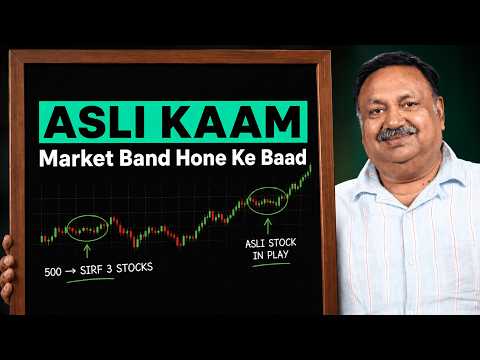
Two traders can run the identical setup, the same opening-range breakout, the same VWAP, the same risk rules, and one profits while the other gets chopped to pieces. The difference, this video argues, is almost never the strategy; it is the stock they chose to apply it to. The real edge is built after the market closes, in the unglamorous evening routine of narrowing a universe of 500 names down to the two or three genuinely worth trading tomorrow. It lays out that preparation process: screening for liquidity, noting where each stock closed and what the daily chart implies, and sorting candidates into a simple three-watchlist system. The next morning, one question, 'Why today?', confirms whether a name still deserves attention, and a clean price-action test separates real opportunity from low-quality stocks that only look exciting. The hardest professional skill it highlights is rejection: a serious trader's first job is not taking a trade, it is choosing the battlefield and walking away from everything that does not qualify. The takeaway for newer traders is that consistency comes less from a secret indicator and more from a repeatable selection process done the night before.

Read summary

Entry Dhundh Rahe Ho Ya Stock? | The Stock In Play Framework

Entry Dhundh Rahe Ho Ya Stock? | The Stock In Play Framework

Retail traders pour most of their attention into execution; professionals pour most of theirs into selection. That single difference, this video argues, may be the biggest gap between two traders' results. It introduces the 'Stock in Play' lens, the idea that across episodes on edge, playbooks, and journaling, one feature quietly appeared in nearly every winning trade: the stock was already in play before the entry was taken. The video uses a detailed journal and technical analysis to assess whether a stock is genuinely stronger or weaker than the broader market, rather than forcing a setup onto a random name. The practical takeaway is to spend your preparation deciding what to trade, because a great setup applied to the wrong stock is still a losing trade, and the right stock is what ties your edge, your playbook, and your journal together.

Read summary
Professional Traders Don't Use 20 Strategies | Here's Why

Professional Traders Don't Use 20 Strategies | Here's Why

The problem is rarely too few strategies; it is too many. Breakout, demand-supply, VWAP, option buying, option selling, swing, intraday, a new system every month, and three years later still no consistency. This video argues your edge is not missing from the market, it is buried in your own journal, and the tool that digs it out is the Playbook. Drawing on the approach used by professional desks like SMB Capital, it walks through cataloguing your three or four best setups, breaking each into its conditions, triggers, and management rules, and trading those repeatedly so your sample size stops resetting every few weeks. The deeper point is that switching systems constantly destroys the very data you need to find an edge. Mastering a handful of setups deeply beats sampling twenty of them shallowly.

Read summary
The Free Trading Tool That Serious Traders Use Every DayResource

The Free Trading Tool That Serious Traders Use Every Day

Most traders, the video argues, do not lose to the market so much as to their own memory. 'I followed my stop loss,' 'it was just an unlucky trade,' the mind quietly rewrites what actually happened. A trading journal is not a motivational diary; it is a behavioural audit system, and without it your edge stays invisible. The episode breaks down exactly what a professional records across six sections, including market context, setup type, risk management, execution, and psychology, so that over time you can answer the uncomfortable question: was the setup weak, or did you fail to follow it? The promise is that consistent journaling turns vague self-blame into specific, fixable patterns, which is why it treats the journal as the single most underused tool available to a serious trader. A free professional journal template accompanies the video.

Read summary
Trading Without an Edge? You've Already LostResource

Trading Without an Edge? You've Already Lost

If most retail traders lose, the reason is not bad luck, bad indicators, or bad timing; it is trading without an edge. This video lays out an eight-step approach to building a robust strategy, from defining your variables and backtesting them honestly to calculating expectancy and converting a proven setup into a written plan. The recurring discipline is 'one market, one setup', resisting the urge to change strategy after three losing trades or to hop between systems every week. It distinguishes between an opinion and an edge: an edge is a setup with positive expectancy demonstrated over a meaningful sample size, tested and repeated rather than felt. The takeaway is that consistency comes from proving and then trusting a single, well-defined edge, not from collecting more strategies, and a free edge-plan template accompanies the lesson.

Read summary
Overtrading, No Stop Loss, FOMO: None of These Are Your Real Problem

Overtrading, No Stop Loss, FOMO: None of These Are Your Real Problem

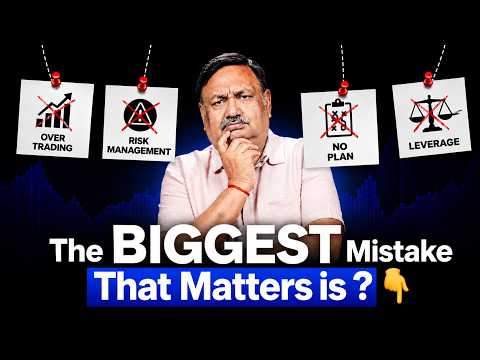
Overtrading, skipping stop losses, excessive leverage, no plan, FOMO, you have heard all of these blamed for trading losses. This video argues none of them is the real cause. They are symptoms. The fundamental problem is the absence of an edge. Going beyond surface-level advice, it defines what a trading edge actually is: a setup with positive expectancy over a large sample size, built on probability rather than prediction or certainty. Once that foundation is missing, the familiar mistakes follow almost inevitably, because a trader with no proven edge has nothing to anchor discipline to. The reframe matters because chasing the symptoms one by one rarely works, while building and trusting a tested edge addresses the root. It is aimed at anyone stuck in a cycle of random losses and lucky recoveries who keeps treating the symptoms instead of the cause.

Read summary
You Don't Need More Strategies, You Need These 2 Things

You Don't Need More Strategies, You Need These 2 Things

If you are not making money, the video argues, the problem is not the market, your strategy, or your broker; it is that you are playing the wrong game, chasing certainty in what is fundamentally a probability game. SEBI's data is cited again: roughly nine in ten Indian F&O traders lose, often not for lack of knowledge but for an obsession with being right. The episode breaks the most expensive belief in trading, that accuracy on every trade is what matters, and replaces it with two pillars every profitable trader operates on: a set of fundamental truths about mindset, and a defined edge that functions like a business model. Being right on any single trade is shown to matter far less than running a consistent edge with discipline across many trades. The lesson is to stop collecting strategies and start internalising those two foundations.

Read summary